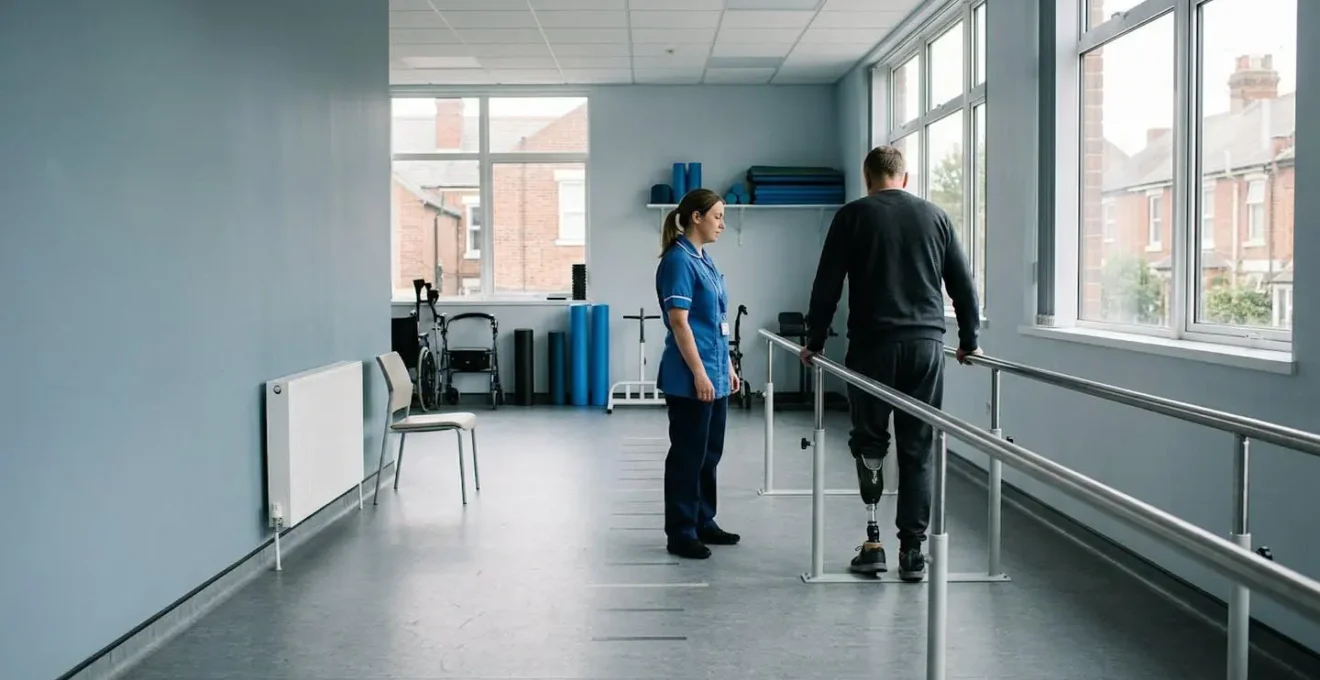
Securing an advanced prosthetic in the UK is not a matter of luck, but a strategic process of building an undeniable clinical case and navigating specific funding pathways.
- Standard NHS provision is based on a baseline functional need, but you can appeal for superior technology by demonstrating « clinical exceptionality » through a formal Individual Funding Request (IFR).
- Charity grants are a primary route for non-essential but life-changing devices like sports prosthetics, requiring a targeted application strategy separate from the NHS.
Recommendation: Stop waiting for a different outcome and start proactively documenting your functional limitations and clinical needs to build a compelling case for the device you truly require.
For many amputees in the UK, the initial gratitude for NHS care can slowly curdle into a deep-seated frustration. You see advanced microprocessor knees, custom-designed sports blades, and multi-grip hands online, yet the device you are provided with feels like a relic from a bygone era. This creates a confusing and often demoralising gap between what is technologically possible and what is deemed « clinically necessary » by the health service. With an estimated 55,000 to 60,000 people in England living with limb loss, you are not alone in this struggle.
The common advice to « speak to your prosthetist » or « look for charities » is true, but it misses the crucial details. It ignores the specific language the NHS understands, the evidence they require, and the strategic thinking needed to succeed. The system isn’t designed to be obstructive, but it is a system with strict rules, budgets, and criteria. Simply asking for a better prosthetic is often a path to disappointment.
This is where a change in mindset is required. This guide reframes the process not as a plea for help, but as the methodical construction of an undeniable case. We will move beyond the platitudes and into the procedural specifics. The key isn’t just to want a better device; it’s to prove, using the system’s own logic, why you are a candidate who will gain significantly more clinical benefit from it. It’s time to shift from being a passive patient to an active navigator of your own prosthetic journey.
This article provides a detailed roadmap, breaking down the distinct strategies required to secure funding. From formal NHS appeals to charity applications and insurance claims, you will learn how to navigate each pathway effectively.
Summary: Your Guide to Prosthetic Funding
- How Is Your Prosthetic Allocation Decided and Can You Appeal for a Better Device?
- How to Access £10,000 Charity Grants for Sports Prosthetics the NHS Won't Provide?
- Standard Health Insurance or Specialist Policy: Which Actually Covers £50,000 Microprocessor Knees?
- The Socket Replacement Mistake That Costs £3,000 When Insurance Excludes Wear-and-Tear
- When to Request a Prosthetic Review After Weight Change, Activity Change, or Socket Discomfort?
- How to Apply for NHS Continuing Healthcare to Get Home Care Fully Funded?
- Standard Insurance or Specific OT Coverage: Which Funds Grab Rails and Stairlifts?
- Why Does a Week of Home Help After Surgery Cost £1,200 Without Proper Coverage?
How Is Your Prosthetic Allocation Decided and Can You Appeal for a Better Device?
Your initial prosthetic device from the NHS is allocated based on a national framework designed to meet a baseline level of functional restoration for the majority of patients with your amputation level. The decision is driven by criteria of safety, reliability, and cost-effectiveness. However, when this standard provision significantly limits your potential for mobility, work, or an active life, you have a formal route to appeal: the Individual Funding Request (IFR). This is not about what you want; it is about proving that your clinical circumstances are significantly different and that an advanced device would provide you with a substantially greater clinical benefit.
The core of a successful IFR is demonstrating « clinical exceptionality. » This means you and your clinical team must prove that your situation is rare and distinct from the typical patient cohort for whom the standard policy was designed. This is a high bar to clear. Your clinician, usually your hospital doctor or specialist, must submit the application on your behalf. You cannot apply directly. The entire process hinges on the quality and depth of the evidence you gather beforehand, transforming a simple request into a compelling, data-driven clinical argument.
Your Action Plan: The NHS Individual Funding Request (IFR) Process
- Establish Clinical Exceptionality: Work with your clinician to define and document why your specific case is significantly different from other patients with the same condition, which is the cornerstone of the IFR process.
- Gather Comprehensive Evidence: Collaborate with your prosthetist and physiotherapist to compile a robust evidence file, including physio reports, fall diaries, occupational therapist assessments, and video gait analysis data.
- Request Clinician Submission: Formally ask your hospital doctor or specialist to submit the IFR application. Remember, patients cannot apply directly, so your clinician’s support is mandatory.
- Demonstrate Significant Benefit: Ensure the application clearly articulates why you would gain substantially more clinical benefit (e.g., improved safety, return to work, reduced need for other care) from the advanced prosthetic compared to the standard one.
- Await Panel Review: An independent IFR panel, comprising doctors, public health experts, and lay members, will review your case. This process typically takes around 30 working days.
- Prepare for the Outcome: If declined, you can request a review within 28 days if you believe the process was flawed. If your clinical circumstances change, you can submit a new application with new evidence.
How to Access £10,000 Charity Grants for Sports Prosthetics the NHS Won’t Provide?
The NHS is structured to provide what is clinically necessary for daily living, which is why devices for specific hobbies or sports are generally not covered. This is where the UK’s vibrant charitable sector becomes a critical funding partner. Accessing these grants is a separate process that runs parallel to, not through, the NHS. It requires a different strategy focused on personal narrative, ambition, and community impact.
A successful model for this is the government’s £1.5 million Children’s Activity Prosthetic Fund, which showed how targeted funding, facilitated by charities like LimbPower, can bridge the gap. For adults, the path involves a direct approach to organisations like Positive Bones, the Douglas Bader Foundation, and Blesma (for veterans). The key is to prepare a compelling application package that includes not just clinical need, but your personal story, your goals, and how a specific device will help you achieve them. It is also critical to understand that you cannot « top-up » an NHS device; you are applying for a completely separate, privately supplied prosthetic.
Your application should be a modular package: a powerful personal story, letters of support from your clinical team, a clear budget, and even video testimonials showing your current limitations. This isn’t about what the NHS won’t provide; it’s about what you aim to achieve with the right support from a different source. Some charities may even host crowdfunding platforms to help you cover any remaining funding gaps after their grant is awarded.
Standard Health Insurance or Specialist Policy: Which Actually Covers £50,000 Microprocessor Knees?
The question of insurance is a minefield for amputees. A standard private health insurance policy is highly unlikely to cover the cost of a high-end prosthetic. These policies are typically designed for acute medical conditions and treatments, not long-term durable medical equipment, which is often subject to specific exclusions. The sheer cost is a major barrier; recent data from prosthetic suppliers shows a six-year cycle for a device like the Genium X4 can cost over £134,000, including the device, replacement sockets, and services.
However, funding for Microprocessor Knees (MPKs) is not impossible. In a landmark decision, NHS England approved the routine commissioning of microprocessor knees (MPKs) for qualifying patients. This created a formal NHS pathway for the most advanced technology.
Case Study: The NHS England MPK Funding Pathway
The NHS policy provides MPKs to patients who meet specific mobility criteria, typically a K3 or K4 mobility level. These are individuals who are community ambulators capable of walking at various speeds and navigating obstacles. The process is evidence-based: a patient must be assessed by a multi-disciplinary team, trial at least two different MPK models, and demonstrate a significant functional improvement over their existing mechanical knee. This is often documented through video gait analysis and standardized outcome measures. The policy proves that with the right clinical justification, even the most expensive technology can be secured through the NHS, bypassing the insurance dilemma entirely.
For those who don’t meet the NHS criteria, the only viable insurance options are highly specialist policies or as part of a significant personal injury or medical negligence claim, where the cost of lifelong prosthetic provision is calculated into the settlement. For most, the most effective route is to work with their clinical team to meet the evidence requirements for the established NHS MPK pathway.
The Socket Replacement Mistake That Costs £3,000 When Insurance Excludes Wear-and-Tear
One of the most common and costly frustrations for an amputee is getting a new socket approved. Many insurance policies and even NHS budget-holders can deny claims for a new socket by classifying it as « wear-and-tear, » which is often excluded. A new socket can cost upwards of £3,000, so this denial can leave you in a painful, ill-fitting, or even unusable device. The mistake is framing the request around the age or condition of the socket itself. The correct strategy is to reframe the request around you, the patient.
The solution is to meticulously document the physiological changes in your residual limb that have made the current socket clinically inappropriate. It is no longer about an « old socket » but about a « changed limb » that requires a new medical prescription to ensure a safe and functional fit. This shifts the justification from a simple replacement to a necessary clinical intervention. Building this case requires proactive self-management and a partnership with your clinical team.
You must become a detective of your own body. This involves a systematic approach to evidence gathering:
- Track Volume Changes: Use dated photographs to document any changes in your limb’s shape, whether due to weight fluctuations, muscle development, or atrophy. Note any new gaps or pressure points.
- Log Skin Issues: Keep a detailed, dated diary with photos of any redness, blisters, pressure sores, or skin breakdown. This provides objective proof that the current fit is causing harm.
- Record Gait Deterioration: Use your phone to take short videos of your walking. A new limp, hip hike, or noticeable asymmetry is powerful evidence that the socket’s poor fit is causing secondary problems.
- Obtain Clinical Documentation: Ask your prosthetist and physiotherapist to formally document that the current socket no longer provides adequate support due to your changed limb shape and that this is causing secondary musculoskeletal pain.
–
By presenting a portfolio of evidence, you transform the conversation. The need for a new socket becomes a non-negotiable clinical requirement to prevent further health complications, making it much harder for a funder to refuse.
When to Request a Prosthetic Review After Weight Change, Activity Change, or Socket Discomfort?
A common mistake is to endure discomfort for too long, assuming it is a normal part of being an amputee. This can lead to skin breakdown, secondary pain, and a decline in mobility. The « wear and see » approach is counterproductive; you need to be proactive. Your prosthetic device is prescribed for a specific body weight, shape, and activity level. When any of these variables change, the prescription may no longer be valid. Knowing the specific triggers for a review empowers you to seek help before minor issues become major problems.
A key threshold for a review is a weight change of ±5kg (around 11 lbs). This amount is typically enough to significantly alter the volume of your residual limb, affecting the socket fit. However, weight is not the only factor. Any new or persistent skin issues, an increased need for sock adjustments, or a noticeable change in your walking pattern are all red flags. The most important rule is the « One New Problem » rule: if you start modifying your life to accommodate your prosthesis, instead of the other way around, it is time for a review.
Conducting a regular self-audit is the best way to stay on top of your prosthetic health. Be vigilant for the following signs:
- Persistent Redness: Any redness on your skin that lasts for more than 30 minutes after removing your prosthesis indicates excessive pressure.
- Pistoning: A sensation of your limb moving up and down inside the socket during walking is a clear sign of a poor fit.
- Referred Pain: New or worsening pain in your back, hips, or your intact limb is often a symptom of compensating for an ill-fitting or poorly aligned prosthesis.
- Activity Level Changes: If you’ve started a new job or exercise routine and the device feels inadequate, or if you’ve become less active and it now feels too heavy, a review is warranted to match the device to your current lifestyle.
How to Apply for NHS Continuing Healthcare to Get Home Care Fully Funded?
For some individuals, the challenges of limb loss are compounded by other significant, long-term health issues. When your care needs are primarily for health, rather than social or personal care, you may be eligible for a little-known but powerful funding stream: NHS Continuing Healthcare (CHC). If you qualify, the NHS will fully fund 100% of your care costs, including care provided in your own home. This is different from local authority funding, is not means-tested, and can be the key to getting the comprehensive support you need after a major amputation.
The central principle of CHC is the concept of a « primary health need. » This is established by assessing the nature, complexity, intensity, and unpredictability of your care needs. For an amputee, this could be triggered by complex wound care, management of phantom limb pain, unstable diabetes (a common cause of amputation), or significant mobility needs requiring skilled handling. The severity of the health event is a key factor; a 2024 UK study highlighted a 24% mortality rate at 1 year post-major amputation, underscoring the profound health impact and the need for ongoing clinical support.
To apply, you must ask your GP, social worker, or other health professional to arrange a CHC checklist assessment. If this initial screen suggests you might be eligible, a full assessment will be conducted by a multi-disciplinary team using a tool called the Decision Support Tool (DST). This tool scores your needs across 12 domains (such as mobility, skin, and cognition). To build a strong case, it’s vital to keep a detailed diary of your daily care needs, focusing on their complexity and the clinical skill required, to demonstrate that your needs go beyond what a social care package could provide.
Standard Insurance or Specific OT Coverage: Which Funds Grab Rails and Stairlifts?
A safe home environment is as crucial as a well-fitting prosthetic, but funding for adaptations like grab rails, ramps, and stairlifts is a common source of confusion. Standard home or private medical insurance will almost certainly not cover these items. Home insurance covers unforeseen events like fires or floods, not planned adaptations. Private medical insurance covers treatment, not environmental modifications. Relying on these policies is a dead end.
The primary route for funding these adaptations in the UK is through your local council’s Disabled Facilities Grant (DFG). This is a means-tested grant based on the recommendations of an Occupational Therapist (OT). The first step is to request an OT assessment from your local council’s social services department. The OT will visit your home to assess your functional needs and recommend specific adaptations required to ensure your safety and independence. These recommendations form the basis of your DFG application.
It’s vital to understand that the OT’s report is the key document. Your role is to be clear and honest with the OT about your daily struggles. Don’t put on a brave face. If you avoid the stairs, have difficulty getting out of the bath, or feel unsafe moving around your home, you must articulate this clearly. The grant is there to fund solutions to these specific problems. For those with more significant needs or who are not eligible for the means-tested grant, charities that focus on housing and disability can sometimes provide funding or low-cost loans. In cases of personal injury, the full cost of home adaptation would be calculated as part of the legal claim, but for most people, the OT and the DFG are the correct and most effective pathway.
Key Takeaways
- The NHS has formal pathways (IFR, MPK policy) to access advanced prosthetics, but success depends on providing robust clinical evidence, not just making a request.
- Charities are the primary funding source for sports prosthetics, requiring a separate, narrative-driven application focused on personal goals.
- The key to getting a new socket approved is to document physiological limb changes, reframing the need as a clinical intervention, not just replacing worn equipment.
Why Does a Week of Home Help After Surgery Cost £1,200 Without Proper Coverage?
The £1,200 figure for a week of post-surgical home help often shocks families, but it reflects the real-world cost of professional care. This is not simply a companion service; it often involves skilled support workers or healthcare assistants. The cost is a composite of several factors: the carer’s hourly wage (often £20-£30 per hour), the substantial agency fee which covers insurance, training, and administration, potential travel costs, and premiums for nights or weekends. A typical 8-hour day at £25/hour for 7 days already amounts to £1,400, making the £1,200 figure a realistic, if not conservative, estimate for a standard daytime package.
This significant expense highlights the critical importance of planning for post-discharge care. Relying on family may not be feasible or safe, especially when skilled tasks like wound dressing, medication management, or specific transfer techniques are required. The financial burden of not having proper coverage can be immense, forcing families to make difficult choices between cost and quality of care, or even leading to a delayed or unsafe discharge from hospital. This is precisely the scenario that funding streams like NHS Continuing Healthcare (CHC) are designed to prevent for those with the highest level of need.
Without a plan, this cost falls directly on the individual or their family. It demonstrates that the prosthetic limb itself is only one piece of the recovery puzzle. The support network and environment, and how they are funded, are equally critical. Understanding this cost breakdown is the first step towards appreciating the value of comprehensive care planning and actively seeking out the funding mechanisms available to you, rather than being faced with a crippling bill when you are at your most vulnerable.
Your journey to securing the right prosthetic and support system begins now. Start by documenting your needs, researching the specific criteria for the funding you seek, and engaging your clinical team as a strategic partner. This proactive approach will transform your position from one of frustration to one of empowerment.