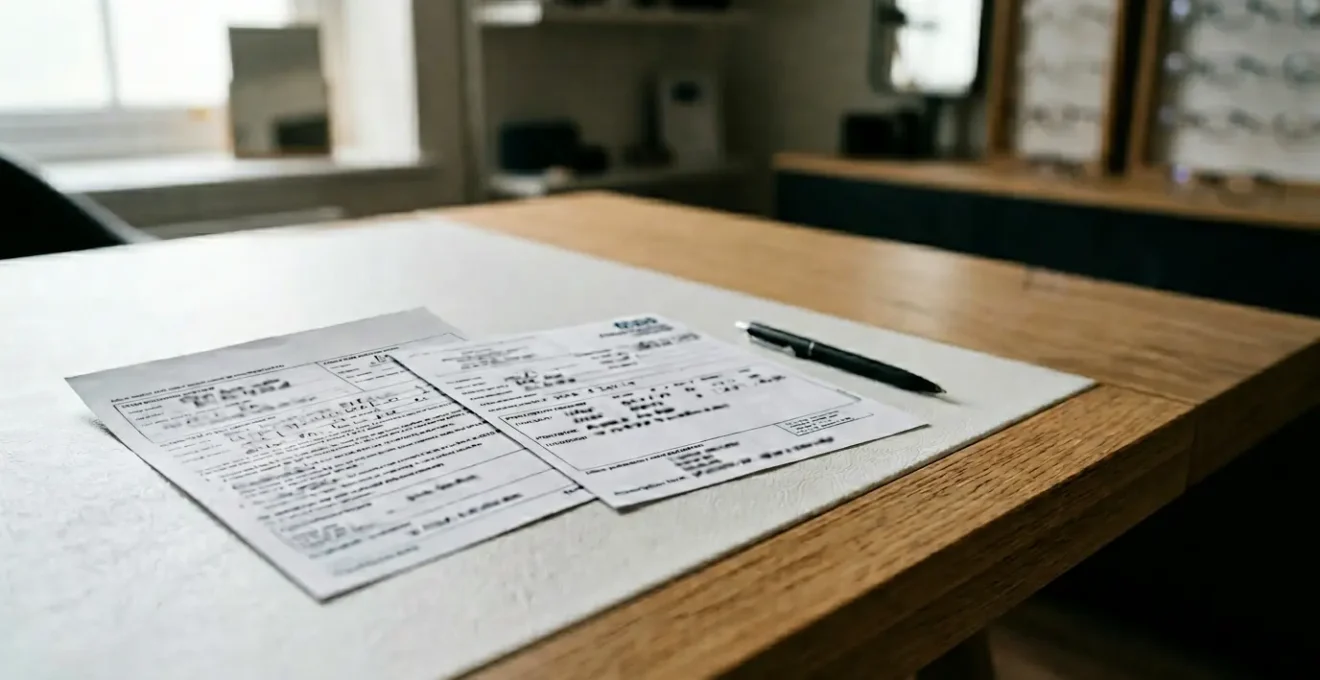
Stop overpaying for glasses; the key isn’t just finding cheap frames, but mastering the system of NHS entitlements you are likely owed.
- Unlock free care with the NHS Low Income Scheme, even if you work full-time, which covers prescriptions, dental, and optical costs.
- Slash costs by up to 70% by reglazing your favorite frames with new lenses instead of buying a whole new pair.
Recommendation: Start by taking five minutes to use the official NHS eligibility checker—it’s the fastest way to find out which entitlements you can claim today.
It’s a frustratingly common scenario: you leave the optician with two new pairs of glasses and a bill that feels disproportionately high. For many UK adults, the annual cost of vision care becomes a grudge purchase, with an average overspend of £150. The common advice is to hunt for 2-for-1 deals or browse budget online retailers. But this approach barely scratches the surface and often overlooks the most significant savings. Many people are simply unaware of the full scope of financial support available to them, a kind of « entitlement blindness » that costs them dearly.
The real power to reduce your optical bills doesn’t lie in finding the cheapest frames. It lies in understanding and navigating the entire UK health spending ecosystem. This means proactively auditing your eligibility for a web of NHS schemes that go far beyond basic benefits. It involves making strategic choices about what you’re actually paying for—the lenses, the coatings, the service—rather than being dazzled by a « free » second pair. This isn’t just about saving money; it’s about claiming the support you’re entitled to and becoming an empowered consumer.
This guide will shift your perspective from passively accepting high costs to actively managing your vision care finances. We’ll demystify the system, showing you precisely how to check your eligibility for substantial NHS contributions, where the true savings are found between different retailers, and how to critically assess the value of expensive lens upgrades. By the end, you’ll have a clear roadmap to significantly reduce your out-of-pocket health spending without ever compromising on the quality of your care.
To help you navigate these opportunities, this article breaks down the essential strategies into clear, actionable steps. The following sections will guide you through everything from claiming NHS vouchers to conducting your own annual health finance audit.
Summary: Your Guide to Slashing Vision Care Costs in the UK
- How to Check If You Qualify for Free NHS Eye Tests and £200 Towards Glasses?
- Specsavers, Online Retailers, or Supermarket Opticians: Where Do UK Adults Save Most on Glasses?
- Anti-Glare, Blue Light, or Photochromic Lenses: Which Upgrades Are Worth the Extra Cost?
- The Floater Symptom That 80% of People Ignore But Indicates Potential Retinal Emergency
- When to Get an Eye Test Before Your Driving Licence Renewal or New Job Requiring VDU Work?
- Why Do 40% of UK Adults Overpay for Prescriptions When They Qualify for Free or Reduced Rates?
- How to Apply for an HC2 Certificate to Get Free Prescriptions, Dental, and Optical Care?
- How to Reduce Your Annual Out-of-Pocket Health Spending by 30% Without Sacrificing Care?
How to Check If You Qualify for Free NHS Eye Tests and £200 Towards Glasses?
The first and most crucial step in cutting your optical costs is to determine if you’re eligible for NHS support. Many people assume this is only for those on specific benefits, but the criteria are much broader. You automatically qualify for a free NHS eye test if you are aged 60 or over, under 16, or aged 16-18 and in full-time education. You also qualify if you have been diagnosed with diabetes or glaucoma, are considered at risk of glaucoma, or are registered as partially sighted or blind.
Beyond the test itself, you may be entitled to an NHS optical voucher to reduce the cost of glasses or contact lenses. Eligibility for these vouchers is tied to being under 16, being a student under 19, receiving specific benefits like Income Support or Universal Credit, or qualifying for the NHS Low Income Scheme (more on that later). The value of these vouchers varies significantly based on the strength of your prescription. A stronger or more complex prescription can lead to a voucher worth over £200.
Understanding the voucher system is key. You are not tied to the optician who performed your eye test. You have the legal right to request your written prescription (a GOS2 form) and take it, along with your GOS3 voucher, to any supplier. This allows you to shop around for the best deal, whether it’s at a high-street chain, an independent optician, or an online retailer that accepts NHS vouchers.
This table provides a clear breakdown of the financial assistance you could receive based on your prescription needs, as outlined in the official NHS voucher values.
| Voucher Band | Single Vision Value | Bifocal/Varifocal Value | Typical Prescription Range |
|---|---|---|---|
| Voucher A | £42.40 | £65.20 | Basic lenses, lower prescription strength |
| Voucher B | £65.20 | £87.80 | Moderate prescription strength |
| Voucher C | £87.80 | £133.00 | Higher prescription strength |
| Voucher D | £210.76 | £233.56 | Very high prescription or complex needs |
Even if you don’t qualify for a full-value voucher, you may still get financial help. Those with a low income can apply for an HC3 certificate, which provides partial help towards health costs. This is a vital safety net for many who just miss the threshold for full support.
Specsavers, Online Retailers, or Supermarket Opticians: Where Do UK Adults Save Most on Glasses?
Once you have your prescription, the hunt for new glasses begins. The market is dominated by high-street giants like Specsavers, rapidly growing online retailers, and supermarket opticians. While online stores often advertise the lowest initial prices, the cheapest option isn’t always the one that offers the best long-term value. A crucial, often-overlooked strategy is reglazing: replacing the lenses in your existing frames.
If you like your current frames, reglazing is almost always the most cost-effective choice. According to data from UK reglazing specialists, this can save up to 70% compared to buying a completely new pair from a high-street optician. With prices for basic single vision lenses starting from as little as £16, it dramatically lowers the cost of a prescription update. This approach uncouples the lens purchase from the frame purchase, giving you maximum control over spending.
When comparing new glasses, the « total cost of ownership » is a more useful metric than the sticker price. A £30 online pair might seem like a bargain, but if it comes with a limited warranty and less durable coatings, you could be buying a replacement within a year. A £180 2-for-1 high-street deal, while more expensive upfront, typically includes a two-year warranty, free adjustments, and aftercare. For complex prescriptions like varifocals, the difference is stark: reglazing might cost £60-£140, whereas a new pair from a high-street chain can easily set you back £200-£400. Always factor in durability, warranty, and service when making your decision.
Anti-Glare, Blue Light, or Photochromic Lenses: Which Upgrades Are Worth the Extra Cost?
Lens coatings and treatments are a primary source of upselling at the optician. While some offer genuine benefits, others provide marginal gains for a significant price hike. The key is to match the coating to your specific lifestyle and needs, rather than accepting a standard package. An anti-glare (or anti-reflection) coating is almost universally beneficial, reducing distracting reflections from screens and headlights, making vision clearer and more comfortable.
Other upgrades are more situational. Photochromic lenses, which darken in sunlight, are a fantastic convenience for people who spend a lot of time moving between indoors and outdoors, like a gardener or delivery driver. They can eliminate the need for separate prescription sunglasses. However, for a dedicated office worker, they may be an unnecessary expense. Similarly, the science behind blue light filtering lenses for preventing digital eye strain is still debated among optometrists. While some users report benefits, a standard anti-reflection coating often solves the core problem of screen glare more effectively.
Thinner, high-index lenses are another common upsell. They are primarily an aesthetic choice, reducing the ‘coke bottle’ effect for those with very strong prescriptions. If your prescription is mild to moderate, the difference in thickness between a standard 1.6 index and a premium 1.67 index lens may be negligible, but the price difference won’t be. Don’t be afraid to ask your optician to show you the physical difference for your specific prescription before committing.
This table helps identify which lens coatings provide real value based on different daily activities, helping you avoid paying for features you don’t need.
| User Profile | Essential Coating | Worthwhile Upgrade | Unnecessary Upsell |
|---|---|---|---|
| Professional HGV Driver | Anti-glare (reduce headlight glare) | Photochromic (daylight adaptation) | Blue light filtering |
| Office Worker/Coder | Anti-reflection (reduce screen glare) | Anti-smudge coating | Premium branded anti-glare |
| Retired Gardener | UV protection | Photochromic or separate sunglasses | Blue light filtering |
| Student | Scratch-resistant coating | Standard anti-reflection | Top-tier branded lenses |
To feel empowered in your decision, it’s useful to have a set of direct questions to ask your optician. Being prepared helps you cut through the sales pitch and get to the facts about what you’re paying for.
- What is the measurable difference in light transmission between your standard anti-glare and the premium version?
- Can you show me independent guidance from The College of Optometrists recommending this coating for my prescription and lifestyle?
- What is the warranty difference between your mid-range and premium lens options?
- How much thinner will 1.67 index lenses be compared to 1.6 index for my specific prescription strength?
- Are there any peer-reviewed studies supporting blue light lens benefits for my level of screen use?
- What is the actual coating durability difference between your standard and premium options in measurable terms?
The Floater Symptom That 80% of People Ignore But Indicates Potential Retinal Emergency
While saving money on vision care is important, it’s crucial to know when a symptom requires urgent medical attention, not a routine appointment. Eye floaters—those tiny specks or cobwebs that drift through your field of vision—are extremely common and usually harmless. However, a sudden and dramatic change in their appearance can be a warning sign of a serious condition like a retinal tear or detachment, which can lead to permanent vision loss if not treated immediately.
The key is to distinguish between normal, long-standing floaters and new, alarming symptoms. The signs that require an emergency response are often ignored by up to 80% of people who experience them. These include:
- A sudden « swarm » or « shower » of new floaters, especially if they are numerous.
- Flashes of light in your peripheral vision, like a camera flash going off to the side.
- A dark shadow or « curtain » appearing to move across your vision.
If you experience any of these symptoms, you should not wait for a routine eye test. Your first port of call during business hours should be a local optician who participates in the NHS Urgent Eyecare Service (CUES/MECS). Outside of hours, call NHS 111 for advice. If you experience the « curtain » effect, you should go directly to A&E. As NHS guidance confirms, high-street optometrists have the specialist equipment to triage these emergencies and can make direct, rapid referrals to a hospital ophthalmology department if necessary. Their role as primary eye care providers is vital in preventing serious vision damage.
Knowing the difference between a nuisance and an emergency is the most valuable piece of eye health knowledge you can have. Financial concerns should never delay seeking help for these specific red-flag symptoms.
When to Get an Eye Test Before Your Driving Licence Renewal or New Job Requiring VDU Work?
Beyond routine check-ups, there are specific life events that should trigger an eye test, some of which come with financial entitlements. Two of the most common are renewing your driving licence and starting a new job that involves significant computer use. For drivers, the law requires you to be able to read a number plate from 20 metres. Your eyesight can change gradually without you noticing, and failing to meet the standard can invalidate your licence and insurance. It’s wise to schedule an eye test before you need to renew your licence, especially when you reach the age of 70, when renewal becomes mandatory every three years.
For office workers, there’s a key piece of legislation that many employees are unaware of: The Health and Safety (Display Screen Equipment) Regulations 1992. Under these regulations, if your job requires you to be a « DSE user » (someone who uses a visual display unit, or VDU, for a significant part of their work), your employer has a legal duty to provide and pay for an eye test upon request. If the test shows you need glasses specifically for DSE work, your employer is also obligated to cover the cost of a basic pair.
Many employees are hesitant to ask, but it is your legal right. A polite, formal request is usually all that is needed. This entitlement not only saves you the cost of a test and potentially a pair of glasses but also promotes better occupational health and productivity. Managing digital eye strain is a shared responsibility between employee and employer. If you spend your days in front of a screen, exercising this right is a simple way to protect both your eyes and your wallet.
To make this process easier, you can use the following template to make a formal request to your employer:
Subject: Request for VDU Eye Test Under Health and Safety Regulations 1992
Dear [HR Manager/Line Manager],
I am writing to formally request a company-funded eye test as per my entitlement under the Health and Safety (Display Screen Equipment) Regulations 1992. My role requires significant use of visual display units, and I believe a professional eye examination would help ensure my continued productivity and wellbeing.
Please confirm the process for arranging this test and whether the company has a preferred optician or reimbursement procedure. I understand this is a legal requirement for employers whose staff use VDU equipment regularly, and I look forward to your response.
Thank you for your assistance.
Best regards,
[Your Name]
Why Do 40% of UK Adults Overpay for Prescriptions When They Qualify for Free or Reduced Rates?
The « entitlement blindness » that causes people to overpay for glasses is even more prevalent when it comes to prescriptions. An estimated 40% of UK adults are paying for prescriptions when they could be getting them for free or at a reduced rate. This issue is specific to England, as NHS policy confirms that prescriptions are free for everyone in Scotland, Wales, and Northern Ireland.
One of the simplest ways to save is with a Prescription Prepayment Certificate (PPC). If you need more than one prescribed item per month, a PPC will save you money. The official NHS figures show that a 12-month PPC costs £114.50 and becomes cost-effective if you need more than 11 items per year. For anyone with a long-term condition requiring regular medication, this is a non-negotiable money-saver, potentially saving hundreds of pounds annually.
Furthermore, millions of people are eligible for free prescriptions through a medical exemption certificate (MedEx). If you have certain long-term conditions, you are entitled to free prescriptions for all your medication, not just the ones related to your condition. Many people are simply unaware that their condition qualifies them. Key qualifying conditions include:
- Diabetes mellitus (treated with medication, not just diet)
- Epilepsy requiring continuous anticonvulsive therapy
- Myxoedema (hypothyroidism)
- Myasthenia gravis
- A permanent fistula
- Forms of hypoadrenalism, including Addison’s Disease
The most significant and under-utilised route to free healthcare is the NHS Low Income Scheme, which we will explore in the next section. Overlooking these entitlements is the single biggest reason people overspend on their health. Conducting a quick audit of your own circumstances against these criteria can unlock immediate and substantial savings.
Your Quick Health Finance Audit Plan
- Points of Contact: List all services where you spend on health: pharmacy, optician, dentist, and any therapies.
- Data Collection: Inventory your last year’s costs. How many prescription items did you buy? What did your last eye test and glasses cost?
- Coherence Check: Compare your profile against eligibility criteria. Use the NHS eligibility checker for the Low Income Scheme. Do you have a condition that qualifies for a MedEx?
- Spotting ‘Lazy’ Spending: Identify where you’re passively spending. Are you paying per prescription instead of buying a PPC? Are you accepting high-street prices for glasses without checking reglazing options?
- Integration Plan: Take action. Buy the 12-month PPC today. Apply for the HC1 form online. Get quotes for reglazing before your next glasses purchase.
How to Apply for an HC2 Certificate to Get Free Prescriptions, Dental, and Optical Care?
The NHS Low Income Scheme (LIS) is the single most powerful tool for UK residents to eliminate a wide range of health costs, yet it remains significantly underused. The scheme is not just for those on benefits; it’s for anyone whose income is below a certain threshold, including students, part-time workers, the self-employed, and even some people in full-time work. Successful application results in an HC2 certificate for full help or an HC3 for partial help.
An HC2 certificate is a golden ticket. It entitles you to free NHS prescriptions, free NHS dental treatment, free NHS eye tests, and an NHS optical voucher for glasses. The process involves completing an HC1 form, which assesses your weekly income against your necessary outgoings. You can complete this form online in about 20 minutes. You will need to provide evidence of your finances, such as recent payslips or, if you’re self-employed, your most recent accounts.
The power of the LIS is best illustrated with an example of who it helps. Consider this common scenario:
Case Study: HC2 Eligibility for a Self-Employed Low-Income Worker
A self-employed graphic designer earning £105.87 per week with weekly outgoings of £106.65 (including council tax and housing costs) applied for an HC2 certificate. Despite not receiving any benefits, their income was less than their assessed weekly requirements. They received an HC2 certificate valid for 12 months, entitling them to free NHS prescriptions, dental treatment, eye tests, and an optical voucher worth up to £233.56 depending on prescription. Over the year, this saved approximately £400 in healthcare costs including two dental check-ups, one filling, quarterly prescriptions, and new glasses.
Crucially, immigration guidance confirms that HC2 certificates are not classed as public funds. This means individuals with « no recourse to public funds » (NRPF) visa conditions can still apply and qualify if they meet the low-income criteria, opening up vital support. The application process is straightforward and the potential savings are immense.
Key Takeaways
- Always check your eligibility for NHS support (eye tests, vouchers, prescriptions) before paying; use the online NHS eligibility checker.
- Reglazing your current frames is often 70% cheaper than buying a new pair from a high-street optician.
- Apply for an HC2 certificate via the NHS Low Income Scheme if your income is tight—it provides comprehensive free care even if you’re not on benefits.
How to Reduce Your Annual Out-of-Pocket Health Spending by 30% Without Sacrificing Care?
Reducing your health spending by a significant margin is not about one single trick; it’s about adopting a strategic, year-round approach. It requires shifting from a reactive consumer to a proactive « health finance auditor » who regularly assesses their entitlements and spending habits. By combining all the strategies we’ve discussed, a 30% reduction in your annual out-of-pocket costs is an entirely achievable goal.
The foundation of this strategy is knowledge. First, master your entitlements. This means buying a Prescription Prepayment Certificate (PPC) if you need more than 11 prescriptions a year. It means applying for a medical exemption certificate if you have a qualifying condition. Most importantly, it means completing an HC1 form for the Low Income Scheme, even if you think you might not qualify. The potential reward of free prescriptions, dental care, and optical support is too great to ignore.
Second, become a smarter shopper. For vision care, this means getting your prescription and walking away. Compare the cost of reglazing your current frames against the « total cost of ownership » of new pairs from various suppliers. Question every upsell on lens coatings and only pay for what genuinely benefits your lifestyle. Remember to exercise your right to an employer-funded eye test if you are a regular VDU user. This systematic approach transforms grudge purchases into controlled, informed decisions. The impact is significant; in 2023/2024 alone, NHS Business Services Authority analysis found that 3.3 million patients saved £817 million with PPCs.
By scheduling these financial health checks throughout the year—reviewing your PPC in January, applying for an HC1 in February, using your VDU entitlement in March—you create a system that consistently saves you money. This isn’t about sacrificing care; it’s about redirecting funds from wasteful overspending towards the care and products that truly matter, or simply keeping that money in your pocket.
Start your own health finance audit today. Use the NHS eligibility checker, calculate your prescription needs, and request that VDU eye test. Taking these small, empowered steps is the most effective way to take control of your health spending and stop overpaying for good.