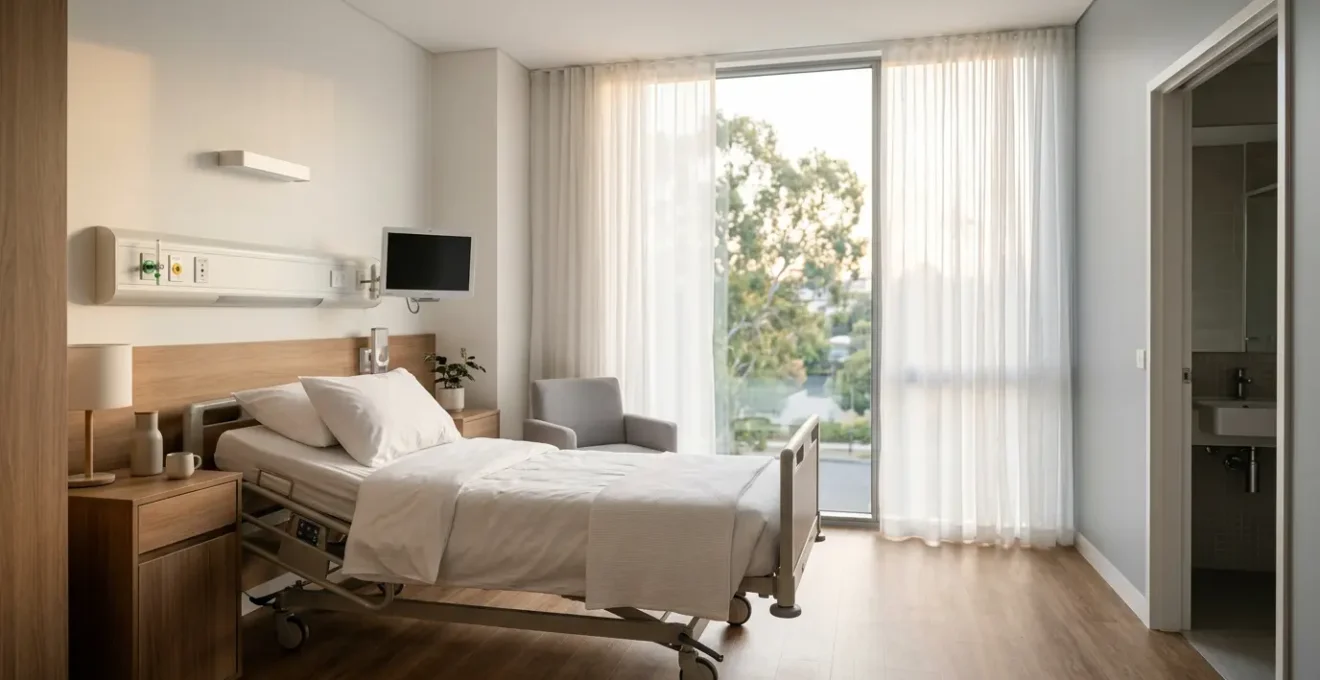
The decision to pay for a private room is less about comfort and more about taking control of your clinical recovery environment.
- A private space measurably reduces sleep disruption from noise and light, which is critical for healing and mental well-being.
- Beyond expensive private hospitals, a key UK option is the NHS « amenity bed »—a private room within an NHS facility, available for a nightly fee.
Recommendation: When making a request, frame it based on clinical needs (e.g., managing anxiety, need for restorative sleep) rather than personal preference to improve your chances of success.
The thought of a hospital stay often conjures images of a busy, noisy ward. The constant beeping of machines, the glare of lights at all hours, the conversations of staff and fellow patients—it’s an environment that feels far from restful. For many in the UK, the default is a shared NHS ward. When the option of a private room arises, the conversation almost immediately turns to the cost, weighing it against perceived luxuries like a personal television or a quieter space. But this framing misses the most critical point.
What if the choice wasn’t about comfort, but about clinical outcomes? The emerging perspective, supported by patient experience data, is that a private room is not a luxury upgrade; it’s a tool for environmental control. It’s about your ability to manage the noise, light, and interruptions that create « recovery friction »—a constant, low-level stress that can actively slow down healing, weaken immune function, and take a significant toll on your mental health. The question then becomes not « Can I afford this? » but « What is the value of a faster, less traumatic recovery? »
This guide moves beyond the surface-level debate. We will analyse the data on how your environment impacts healing, explore the often-overlooked strategy of securing an NHS « amenity bed, » and provide a clear framework for deciding if investing in a private room is the right strategic decision for your health and well-being during a planned hospital stay.
To help you navigate this complex decision, this article breaks down the key factors to consider. From the science of sleep and recovery to the practical steps for accessing different room types, here is a complete overview.
Summary: A UK Patient’s Guide to Hospital Room Choices
- Why Do Patients in Private Rooms Report 30% Better Sleep and Faster Discharge Times?
- How to Access an NHS Amenity Bed or Private Wing Without Full Private Insurance?
- Private Room at £250 or £500 Per Night: What Determines Price Differences Between UK Hospitals?
- The Ward Anxiety Trap: When Shared Rooms Delay Recovery for PTSD or Immunocompromised Patients
- When to Request a Private Room: Before Admission or Upon Arrival for Best Availability?
- Shared Ward, Private Room, or Deluxe Suite: How Much Does Accommodation Choice Affect Your Premium?
- NHS Ward or Private Room: Is Paying £300 Per Night Worth It for Recovery and Sleep?
- How to Prepare for a Planned Hospital Stay to Reduce Stress and Speed Up Discharge?
Why Do Patients in Private Rooms Report 30% Better Sleep and Faster Discharge Times?
The single greatest clinical benefit of a private room is the ability to control your environment, and nowhere is this more critical than for sleep. Restorative sleep is not a passive activity; it is when the body performs its most essential repairs, consolidates memories, and regulates hormones vital for healing. A shared ward is fundamentally hostile to this process. The constant interruptions create a state of hypervigilance, preventing the brain from entering the deep, restorative stages of sleep.
The data on this is stark. A 2024 study in *Sleep and Breathing* found that patients in shared rooms were significantly more likely to have their sleep disturbed by environmental factors. Specifically, they were 3.9 times more likely to be affected by noise and 8.5 times more likely by light. This isn’t just an inconvenience; it’s a direct impediment to recovery. When sleep is fragmented, the immune system is suppressed, pain perception is heightened, and the psychological resilience needed to cope with illness is eroded. This is the tangible cost of a shared environment.
Conversely, the environmental control offered by a private room allows a patient to align the space with their own circadian rhythm. By managing light, eliminating non-essential noise, and setting the temperature for comfort, you create the conditions for genuine rest. This improved sleep quality is a primary driver behind reports of faster recovery, reduced need for pain medication, and ultimately, earlier discharge. The investment in a room becomes an investment in more effective, uninterrupted healing time.
How to Access an NHS Amenity Bed or Private Wing Without Full Private Insurance?
For many patients in the UK, the choice seems binary: a free but potentially disruptive NHS ward, or a very expensive room in a fully private hospital. However, a third option exists that is often overlooked: the NHS amenity bed. This is a private, single-occupancy room located within an NHS hospital that patients can pay for out-of-pocket, while still receiving all their clinical care from the NHS. It’s a hybrid model that offers privacy without the full cost of private healthcare.
The key challenge is that these beds are not widely advertised and availability is limited; they are offered based on clinical need and ward occupancy, not just on a first-come, first-served basis. Securing one requires a proactive and strategic approach. It is not enough to simply ask for one; you need to build a clinical case for why it would benefit your recovery. This is where communication with the hospital’s Patient Advice and Liaison Service (PALS) or the ward manager becomes crucial.
Framing your request correctly is essential. Rather than stating a preference for « comfort » or « quiet, » using language that highlights clinical concerns—such as managing pre-existing anxiety, a history of PTSD, or the need for deep rest to aid recovery from a specific procedure—can elevate your request. Below is a practical checklist to guide you through the process.
Your Action Plan for Securing an NHS Amenity Bed
- Initial Contact: Contact the hospital’s Patient Advice and Liaison Service (PALS) or the ward manager at least 24–48 hours before admission to inquire about amenity bed availability and the process.
- Frame the Request: Articulate your need using clinical language, such as « to manage anxiety that could impact my recovery » or « to ensure restorative sleep post-surgery, » rather than simply asking for more comfort.
- Get on the List: Ask to be placed on a waiting list for your specific admission dates and confirm if a deposit is required. Understand that availability can change rapidly.
- Leverage Appointments: Use your pre-assessment clinic appointment as a key opportunity. Discuss your need with the clinician and ask for a note to be added to your file recommending a single room if possible.
- Confirm and Pay: Be prepared for upfront payment. Most NHS Trusts require the full cost (typically £75–£390 per night) before or at admission. Clarify the refund policy in case the room is needed for another patient.
Private Room at £250 or £500 Per Night: What Determines Price Differences Between UK Hospitals?
Once you begin exploring private rooms, whether in an NHS or private hospital, you’ll notice a wide range of prices. A room in one hospital might be £250 per night, while a seemingly similar one across town is £500 or more. This variation isn’t arbitrary; it’s driven by a combination of location, the level of service included, and the hospital’s brand positioning. Understanding these factors is key to determining which option provides the best value for your specific needs.
Location is the most significant driver. As with property, healthcare costs are higher in major city centres, particularly London. In fact, a 2026 analysis of UK private healthcare pricing reveals that London-based private hospitals carry a significant premium for both accommodation and procedures. Beyond geography, the price reflects the « hotel » aspects of your stay. A standard private room will include an en-suite bathroom, meals, and basic television. A premium or deluxe room, however, may offer superior finishes, more space for visitors, a gourmet menu, and dedicated concierge services.
The following table, based on recent UK market data, breaks down the typical costs and inclusions across different types of private accommodation. This provides a clear framework for comparing your options and understanding what you’re paying for at each level.
| Room Type | Typical Cost Per Night | What’s Included | Location Examples |
|---|---|---|---|
| NHS Amenity Bed (Basic) | £63–£150 | Single en-suite room, NHS clinical care, basic TV/Wi-Fi | Dartford, Peterborough, Wycombe |
| NHS Amenity Bed (Standard) | £150–£258 | En-suite with shower, towels, complimentary parking, menu choice | Royal Surrey, Kingston, Epsom |
| NHS Amenity Bed (Premium) | £258–£390 | Enhanced en-suite, private patient menu, complimentary toiletries, Wi-Fi | Kingston Private Health, London-adjacent trusts |
| Private Hospital (Standard) | £275–£400 | En-suite bedroom, TV/Wi-Fi, meals, ward nursing care, adjustable bed | Regional private hospitals (non-London) |
| Private Hospital (Enhanced) | £400–£600 | More space, superior finishes, better visitor seating, premium food | Major city centers, branded hospital groups |
| Private Hospital (Deluxe/Suite) | £600–£1,133+ | Separate living area, concierge service, gourmet meals, personal entertainment | Central London (Cromwell, HCA, Cleveland Clinic) |
The Ward Anxiety Trap: When Shared Rooms Delay Recovery for PTSD or Immunocompromised Patients
For some patients, a shared ward is more than just an inconvenience; it’s a significant clinical risk. This is especially true for individuals who are immunocompromised or those with pre-existing mental health conditions like anxiety, depression, or PTSD. For these vulnerable groups, the lack of environmental control can trigger what can be described as the « Ward Anxiety Trap »—a vicious cycle where the stressful environment exacerbates their condition, which in turn actively delays their physical recovery.
The science behind this is clear. As one study notes, the impact of a noisy environment goes far beyond simple annoyance.
Sleep deprivation due to environmental noise increases pain sensitivity, slows wound healing, and weakens immune function—all of which contribute to longer hospital stays and complications.
– Critical Care Journal, Study on noise impact on patient recovery
This is compounded by the sheer level of noise. Studies show that hospital room noise routinely surpasses 55 dB, with peaks over 80 dB—far exceeding the World Health Organization’s recommendation of 30-35 dB for a healing environment. For an immunocompromised patient, the proximity to others increases infection risk and the associated anxiety. For a patient with PTSD, the sudden noises, alarms, and lack of privacy can be intensely triggering, placing their nervous system in a constant state of fight-or-flight.
In these specific cases, a private room ceases to be a preference and becomes a form of clinical justification. It is a necessary tool to create a low-stimulus, safe, and controlled sanctuary that allows the patient’s mind and body to focus entirely on healing. The ability to control visitors, light, and sound is not a luxury; it is an essential component of their treatment plan, helping them avoid the Ward Anxiety Trap and giving them the best possible chance at a smooth and rapid recovery.
When to Request a Private Room: Before Admission or Upon Arrival for Best Availability?
Timing is everything when it comes to securing a private room, particularly an NHS amenity bed where availability is scarce. The common assumption might be to wait until you arrive at the hospital, but this is often too late. The most effective strategy is to begin the process as early as possible, ideally as soon as your planned admission date is confirmed. Proactive communication is your most powerful tool.
The demand for single-occupancy rooms has increased significantly, especially in the post-COVID era where infection control became a top priority for hospitals. While this has made single rooms more common for clinically necessary isolation, it has also made them scarcer for patients seeking them for comfort or well-being. This heightened demand means that waiting lists are common, and those who inquire early stand the best chance.
Your first port of call should be the hospital’s admissions office or PALS several days—or even weeks—before your stay. However, the procedures can be quite specific and rigid, and understanding them is key to avoiding disappointment.
Case Study: NHS Amenity Bed Booking Protocols
A review of procedures across several NHS Trusts, including Parkside Suite Wexham and Kingston Private Health, reveals a common pattern. Patients are typically required to contact the bookings or private patient office at least 24-48 hours before admission during standard office hours (e.g., Monday-Friday, 8am-6pm). Rooms can rarely be booked weeks in advance as availability is dependent on daily discharge rates and clinical emergencies. Full payment is almost always required at the time of booking to secure the room. For patients already admitted to a ward, a transfer request must be made via the nurse in charge and requires approval from the lead consultant, whose decision is final. Importantly, patients requiring specialist care (e.g., ICU, high dependency) are generally not eligible for an amenity bed until their condition has stabilized.
The key takeaway is that securing a room is a formal process, not a casual request. Starting early, using the official channels, and having your payment ready are the critical steps to maximise your chances of securing the private space that can make a significant difference to your hospital experience.
Shared Ward, Private Room, or Deluxe Suite: How Much Does Accommodation Choice Affect Your Premium?
If you have private medical insurance (PMI), you might assume that a private room is automatically included. For the most part, you would be correct, but the level of accommodation covered can vary, and it’s essential to check the fine print of your policy. Understanding how your choice of room impacts your insurance coverage—and potentially your future premiums—is a crucial part of financial planning for a hospital stay.
Most standard UK private medical insurance policies are designed to cover the cost of a standard private room in a hospital that is on their approved list. This typically includes the room itself, meals, and nursing care. As one industry guide states:
Most UK private medical insurance policies are designed to cover a standard private room for eligible inpatient treatment—and you’d usually pay extra if you want a suite.
– Going Private UK, Private Hospital Room Cost UK Guide
Where you might incur extra costs is if you opt for a « deluxe » room or a « suite. » These upgraded accommodations often feature separate living areas, enhanced menus, and other hotel-like amenities. These are generally considered non-essential extras, and your insurer will likely require you to pay the difference in cost out-of-pocket. It is vital to get a clear cost breakdown from the hospital and confirm coverage with your insurer before you commit to an upgraded room to avoid any surprise bills.
While a single claim for a standard room is unlikely to dramatically affect your renewal premium on its own, it does contribute to your overall claims history. The cost of private healthcare is rising, and your future premiums will be influenced by the total value of claims you make. Therefore, while your policy is there to be used, being mindful of choosing unnecessarily expensive accommodation can be a prudent long-term financial strategy.
NHS Ward or Private Room: Is Paying £300 Per Night Worth It for Recovery and Sleep?
Ultimately, the decision to spend £300, £400, or more per night on a private room is a deeply personal one. It requires weighing a tangible financial cost against the intangible—but very real—benefits of peace, privacy, and control. For those who have experienced both environments, the difference is often described as profound. It’s not just about avoiding disturbances; it’s about preserving your dignity and autonomy during a vulnerable time.
Patient experience research consistently highlights the psychological toll of shared wards. The feeling of being constantly « on display, » the need to negotiate shared space, and the emotional impact of witnessing the distress of other patients all contribute to mental and physical exhaustion. A major NHS study on hospital design captured this sentiment perfectly, directly from patients themselves.
Patients with recent experience of shared hospital accommodation acknowledged that the single rooms gave them peace and quiet, compared with the noise of an open or bay ward environment. They described disturbed nights and feeling exhausted and in need of sleep following their discharge from an open ward.
– NCBI Patient Experience Research, Evaluating a major innovation in hospital design
Is it « worth it »? If you view the cost as buying a luxury, the answer may be no. But if you reframe the cost as an investment in your recovery toolkit, the calculation changes. Consider the potential costs of a slower recovery: extra days off work, the need for more follow-up care, or the long-term mental health impact of a traumatic hospital stay. When viewed through this lens, the nightly fee for a private room can seem like a very reasonable price to pay for a faster, smoother, and more humane healing journey.
Key takeaways
- The hospital environment is a clinical factor: The constant noise and light in shared wards can actively hinder the healing process by disrupting essential sleep.
- NHS Amenity Beds offer a valuable middle ground, providing a private room within an NHS setting, but securing one requires proactive and strategic communication with the hospital.
- The core benefit of a private room is « environmental control, » which allows you to create a low-stress sanctuary focused on rest, and this benefit is particularly critical for immunocompromised patients or those with anxiety or PTSD.
How to Prepare for a Planned Hospital Stay to Reduce Stress and Speed Up Discharge?
Regardless of whether you end up in a shared ward or a private room, preparing for a planned hospital stay is one of the most effective ways to reduce stress and retain a sense of control. The hospital environment is inherently disruptive; a 2024 respiratory ward study found that 77% of hospitalized patients described their sleep quality as worse than at home, citing noise, vital sign checks, and light as the main culprits. A good preparation strategy is your first line of defence against this disruption.
Your goal should be to create a small bubble of personal comfort and normalcy. This involves packing items that can help you manage your immediate environment. A high-quality eye mask, noise-cancelling headphones or earplugs, and a familiar pillow or blanket can make a world of difference. Entertainment is also crucial; download movies, podcasts, or books to your devices beforehand, as hospital Wi-Fi can be unreliable. Having these items on hand empowers you to reclaim some autonomy, even in a shared space.
This sense of autonomy is a powerful psychological tool for healing. Patients in single rooms often report feeling more independent and « at home, » which contributes to a more positive mindset and better engagement with their recovery. As patient experience research from the NHS highlights, the space becomes their own.
The privacy of the single room meant patients felt that they retained their independence and freedom; they were able to do what they liked, when they liked and in their own time. They perceived the room as their own space and compared it with being at home.
– NHS Single Room Patient Experience Study
Whether you secure a private room or not, you can apply this principle by preparing thoughtfully. By anticipating the challenges of the hospital environment and packing a « recovery kit » tailored to your needs, you are not just packing for comfort—you are actively participating in your own care, reducing recovery friction, and setting the stage for a quicker, less stressful discharge.
Ultimately, making an informed choice about your hospital accommodation and preparing effectively are key steps in taking control of your health journey. For a deeper, personalised analysis of how these choices fit within your specific healthcare plan, consulting with a patient advocate or healthcare advisor is the logical next step.